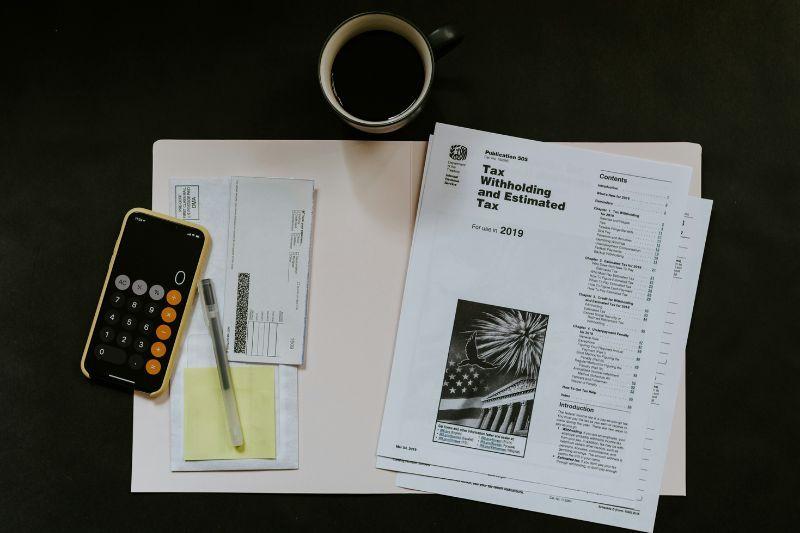

Statistics Netherlands counted 62,000 fewer solo self-employed workers in 2025, which is the first annual drop in years. It followed the Dutch tax authority restarting enforcement against false self-employment on January 1 of that year. But most of those freelancers didn't stop working. They just moved onto payroll.
While most guides on remote work in Europe tend to rank cities by rent, weather, and internet speed, those factors are relevant only for a two-month stay. Over a full year, a couple of other, more important things decide whether the arrangement works out for the average freelancer: where they count as a tax resident, which country collects their social contributions, and whether the permit they hold covers the work they are doing.
This guide covers five markets in Western Europe where a skilled independent professional can work under a formal employment contract while keeping their own clients: Spain, France, the Netherlands, Belgium, and Switzerland. Each section covers the entry route, the tax position, and the specific rule most likely to cause problems twelve months in.
Key takeaways
- Living and working remotely from a European country involves three systems: immigration, tax residency, and social security, and each one decides its own rules independently of the other two.
- Employment status determines whether someone is classified as employed or self-employed. Most European tax regimes and the European Union telework agreement are open to employees only.
The two versions of remote work
Remote work can be described as two easily confused arrangements.
In the first, the work stays where it was, and only the person moves. Foreign employer or foreign clients, foreign invoices, and a desk in Valencia. In the second, the person joins the local economy: local clients, local registration, local filings, etc.
But freelancers often plan for the first and end up in the second, triggered by a client in the new country offering a project worth taking.
Immigration, tax residency, and social security each respond to that on their own terms. A residence permit may require income from outside the country, tax residency applies after a set number of days regardless of where clients are based, and the social security coverage follows either the employer or the worker, under rules we'll discuss later in this article. So how do you know where you stand with each one?
Spain's inviting digital nomad visa
Spain launched its digital nomad visa under the Startup Law at the end of 2022. It grants non-EU remote workers a residence permit of up to three years, renewable, with Schengen travel included.
The 2026 income requirement is around €2,849 per month for a single applicant. That equals 200% of the Spanish minimum wage and changes each year with the minimum wage. Royal Decree 126/2026 raised the minimum wage by 3.1% in February, which raised the independent contractor visa threshold with it.
However, there's one condition you need to be aware of before applying: no more than 20% of income may come from Spanish clients. Exceeding it produces a refusal rather than a request for clarification. Freelancers who spent a year in Spain informally, picking up local work along the way, are usually the ones to discover the problem at the application stage.
Visa holders can also opt into the Beckham regime, which taxes Spanish employment income at a flat 24% up to €600,000 for the year of arrival plus five more. The election is made through Modelo 149, within a strict six-month window of registering with Spanish social security.
How France made freelancing official
France posted the fastest median fixed broadband in Europe in mid-2025, according to Speedtest data, with fiber reaching well past the major cities. A stable internet connection is one of the reasons freelancers choose France for remote work specifically.
But more than that, the legal side works in France's favor too. Portage salarial lets someone keep their own clients and rates while holding formal employment status, with a branch collective agreement fixing minimum pay by seniority. It's written inside the Code du travail at articles L1254-1 onward rather than existing as an informal workaround.
France taxes newly arrived employees differently, under Article 155 B of the tax code. Qualifying employees can exempt an impatriation bonus from income tax, or take a flat 30% exemption on total pay instead. The benefit lasts until December 31 of the eighth calendar year after duties begin, so a 2026 start carries through 2034. To qualify, you must not have been a French tax resident in the five years before.
The one caveat is that recruitment has to happen before the move, not after. Someone who relocates first and finds a French role once settled falls outside the regime, with no way to fix the order retroactively.
Strong Dutch demand, weakening Dutch perks
Enforcement is the first thing to understand about the Dutch market in 2026. The Belastingdienst resumed full enforcement against false self-employment on January 1, 2025, ending a pause that had been in place since 2016. Back assessments reach to that date. From January 2026, the authority can add fines for deliberate misclassification, up to 100% of the assessment.
That is what produced the 62,000 figure we've mentioned earlier. Several large Dutch firms reduced or stopped using solo contractors altogether, unwilling to take on that risk themselves.
For employees, the 30% ruling is still one of the better packages in Europe, though the percentage is set to drop. Qualifying employees get up to 30% of gross salary tax-free through 2026, then 27% from January 1, 2027, when the minimum salary requirement rises to €50,436. The benefit lasts five years, and applicants must have lived more than 150 kilometers from the Dutch border for 16 of the 24 months before starting work.
Belgium's December 2025 upgrade
Belgium improved its inbound taxpayer regime in December 2025, and the change got little attention outside the tax press. A law dated December 18, 2025 raised the tax-free allowance an employer can pay on top of salary from 30% to 35% of gross pay, removed the €90,000 annual cap, and lowered the minimum gross salary from €75,000 to €70,000. All three changes apply retroactively to January 1, 2025. A circular published on April 1, 2026 explains how the retroactive part works in practice.
Belgian social security hasn't caught up with the tax change, though. Those extra five percentage points are exempt from income tax but still count toward social contributions, so net figures based on the 35% headline overstate what you'd actually take home.
Self-employment in Belgium adds a separate complication. Quarterly contributions are estimates, based on income from three years earlier, then adjusted once the tax authorities confirm what you've earned. That adjustment can end up as a bill years later, and it's on you to cover it whether you've saved for it or not.
4,500 Swiss permits and the highest rates in Europe
Switzerland pays the highest day rates in Europe for senior technical freelance work. Getting in, however, is genuinely difficult.
Self-employment in Switzerland isn't a simple application. The cantonal AHV compensation office reviews the arrangement and issues a decision, and refusals are common when most of your income comes from one client. A refusal is costly for both sides, since the client then owes social contributions on everything already paid.
Non-EU and EFTA nationals also face permit quotas. The Federal Council set the 2026 allocation at 4,500 residence permits and 4,000 short-stay permits, issued through employers who first have to show they couldn't find someone locally or within the EU.
Health insurance is mandatory and bought privately rather than deducted from payroll, so it needs its own line in your budget. Federal income tax is moderate, but cantons and communes decide the total, which is why Zug and Geneva produce very different results on identical salaries.
The 50% rule for cross-border weeks
Anyone splitting their working week between two EU countries falls under Regulation 883/2004, which assigns a single country of social security coverage. Before 2023, teleworking 25% or more of the time from your country of residence generally moved that coverage away from your employer's country.
The Framework Agreement on habitual cross-border telework, in force since July 1, 2023 under Article 16(1) of the same regulation, changed that. An employee teleworking less than 50% of their total working time from home can request to stay covered in the employer's country instead, backed by an A1 certificate valid for up to three years and renewable. The employer and employee apply jointly, and both countries need to have signed the agreement.
France, Spain, the Netherlands, Belgium, and Switzerland have all signed. Around 23 countries had signed by early 2026, with Belgium keeping the official list.
The agreement only covers employees. Self-employed workers fall outside it, and no wording in a contract changes that. Two people can do identical work for identical clients from identical apartments, and only one of them will be eligible to apply.
How Hightekers can help
As we've covered throughout, the country matters less than the status. Employee or self-employed decides which visas, tax regimes, and social security mechanisms are open to you at all, before location enters the conversation.
That's the part Hightekers handles. Members work under a full employment contract in all five markets while keeping their own clients and setting their own rates. Hightekers issue the invoices, manage the client contracts, handle compliance, and pay a guaranteed salary on the same day each month whether or not the client has paid yet. The employment contract also brings pension contributions, unemployment eligibility, insurance coverage, and the kind of payslip a mortgage lender will actually accept, which is exactly what a self-employed setup in any of these countries leaves you to build yourself.
Ready to live the digital nomad lifestyle? Join Hightekers and check what the terms look like in the market you're considering, before you commit to a lease or a start date.
FAQ
Which European country is best for working remotely?
Spain offers the most accessible route for non-EU remote workers, combining an established digital nomad visa with access to a flat 24% tax rate. France leads on infrastructure and legal framework, the Netherlands on market depth, so the answer depends on whether the priority is entry, tax, or clients.
At what point does working remotely make someone a tax resident?
Most countries apply a 183-day threshold within a calendar year, though the test varies and several also factor in where a person's home and family are based. Beyond that threshold, worldwide income can become reportable in that country. Hightekers covers the mechanics in its guide to the 183-day rule.
Can a new digital nomad visa holder work for local clients?
In Spain, no more than 20% of income may come from Spanish clients, and exceeding that results in refusal. Other countries set different limits or none, so make sure to check the permit conditions before accepting any local work or paying local taxes.
What is an A1 certificate?
It is the document confirming which country's social security system covers a worker operating cross-border within the EU, EEA, and Switzerland. Cross-border employees generally need one, and it is issued by the country whose system applies rather than the country the work happens to be done from.